
How much will Wednesday charge for next season's shirt?
Costing up the price of a football shirt

The 2025/26 season is driftwood, for Sheffield Wednesday anyway. And as fans ponder about life in the 3rd division, it got me thinking. I paid £72 for this season’s away kit, one of the best we’ve had in ages.
How much will the club charge for a new shirt next season? My guess is there won’t be much change out of £80. We will still buy them anyway.
The retail price of a football shirt
A Premier League kit costs on average just under £100, with the price broken down roughly as follows: fabric, sewing, and transport costs around £9.50, and marketing, licensing fees, and distribution around £10.50. Flashscore That means production and getting it to your door accounts for less than a quarter of what you pay.
Last year I saw Lewandowski’s shirt on sale at an official Barcelona club shop for an eyewater €197.
Where does the money actually go?
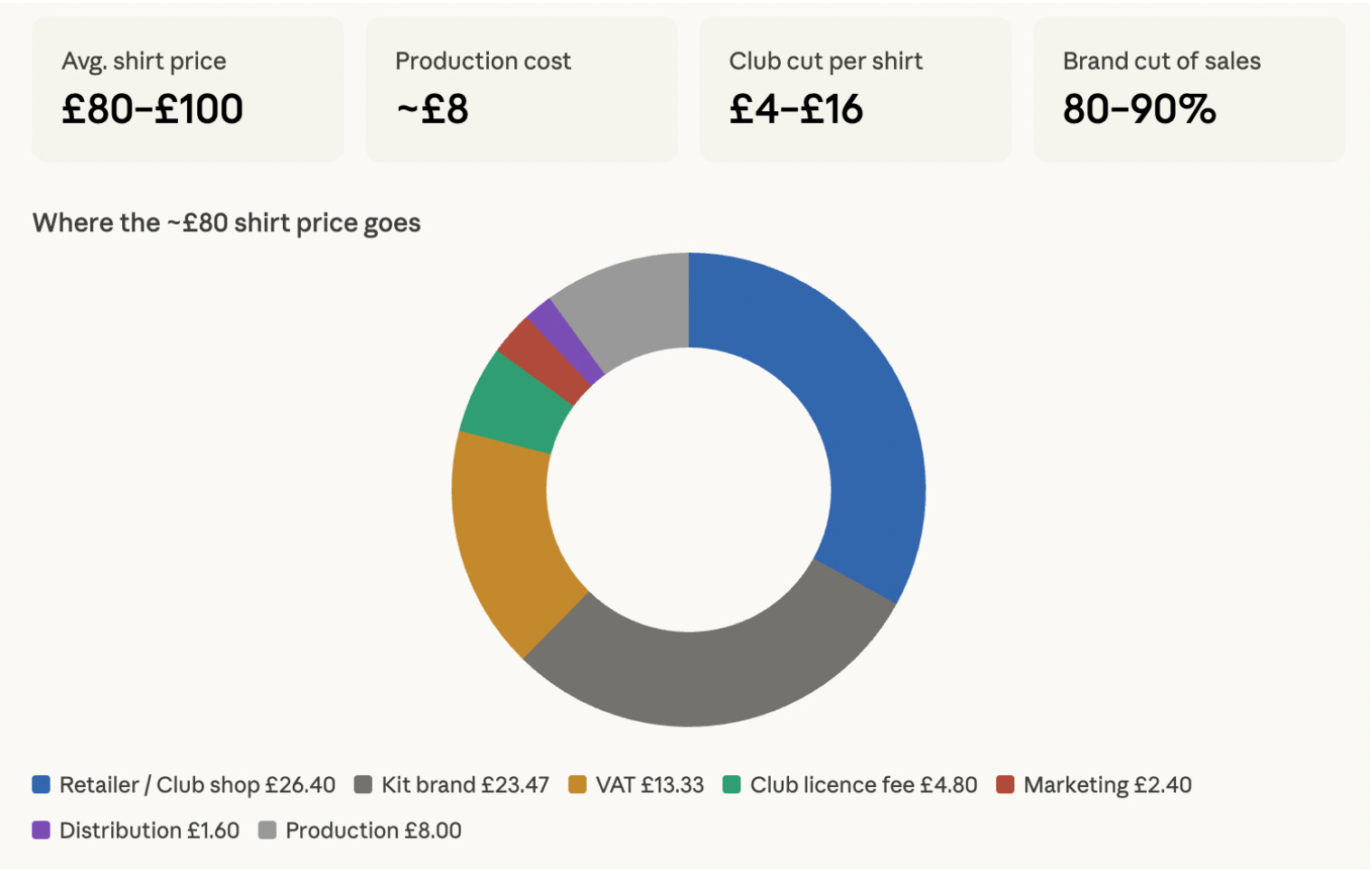
When a shirt is sold at around £80, the retailer (often the club itself) pockets around £26.40, while the manufacturing brand receives £23.47. VAT accounts for £13.33, the club earns a £4.80 licence fee per shirt, £2.40 per shirt goes to marketing, and £1.60 towards local distribution. The production cost itself is just £8, covering materials, labour, and transportation, with manufacturing usually taking place in Asia. Footy Headlines
Kit brands: lots of exposure, little profit
Counterintuitively, the big brands often don’t profit much from shirt sales themselves. Puma, Adidas, Nike, and other manufacturers don’t profit from shirt sales, they benefit primarily from having their brands displayed on the shirts of clubs fans are passionate about. One director of a major German brand admitted that “breaking even is already a win” from sales, especially with big clubs where the focus is on the media exposure, not the margin. Flashscore
The big money is in the kit deal, not individual shirts
Kit manufacturers typically take 80–90% of all revenue from shirt sales. Clubs in return receive large up-front payments. At best, a club can earn 20% of net sales, though for many major deals, royalty payments to a club only kick in after a large sales milestone,say, 2 million shirts. DANIEL GEEY
Liverpool’s deal with Nike, for example, sees them take a 20% commission from sales on top of a £30m annual base payment. Most other clubs earn only 7.5–15%. Goal.com
The “shirt sales pay for transfers” myth
To recoup Pogba’s transfer fee of £89m, Manchester United would have needed to sell one million shirts just to start earning royalties, and then a further 8.9 million shirts on top, yet they averaged only around 1.85 million shirts per season (source).
How much do top clubs actually earn in shirt revenue?
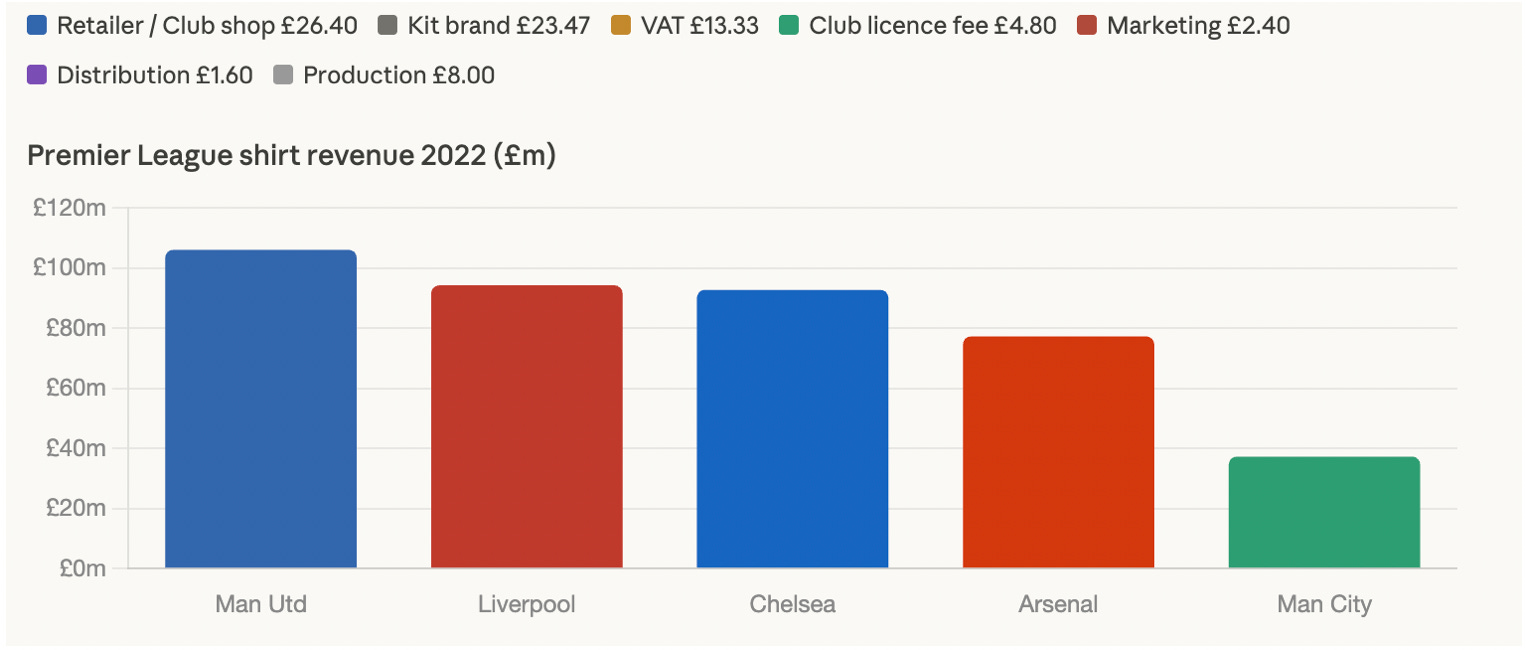
Manchester United led Premier League shirt sales in 2022 with £106.1 million, boosted by Ronaldo’s return. Liverpool and Chelsea weren’t far behind at £94.3m and £92.8m respectively. However, after the top handful of clubs the numbers fall off sharply, Manchester City, despite their dominance on the pitch, made only £37.3m in shirt revenue (source).
The bottom line
The fan pays a premium, but most of that premium goes to the retailer, the kit brand, and the taxman. The club’s direct slice from each shirt is modest, which is why the massive upfront payments from kit deals (Manchester United’s £750m Adidas deal, for instance) matter far more than any individual sale. In the grand scheme of modern football finance, shirt revenue is almost a drop in the bucket compared to TV and media rights, which are the real main course (source).
A question of you.
How much do you think is a fair price for a new shirt?
Sheffield Wednesday can potentially exit their kit deal with the Italian manufacturer Macron if the club is taken out of administration by a new owner, as insolvency regulations allow companies exiting administration to effectively void existing contracts (source).